
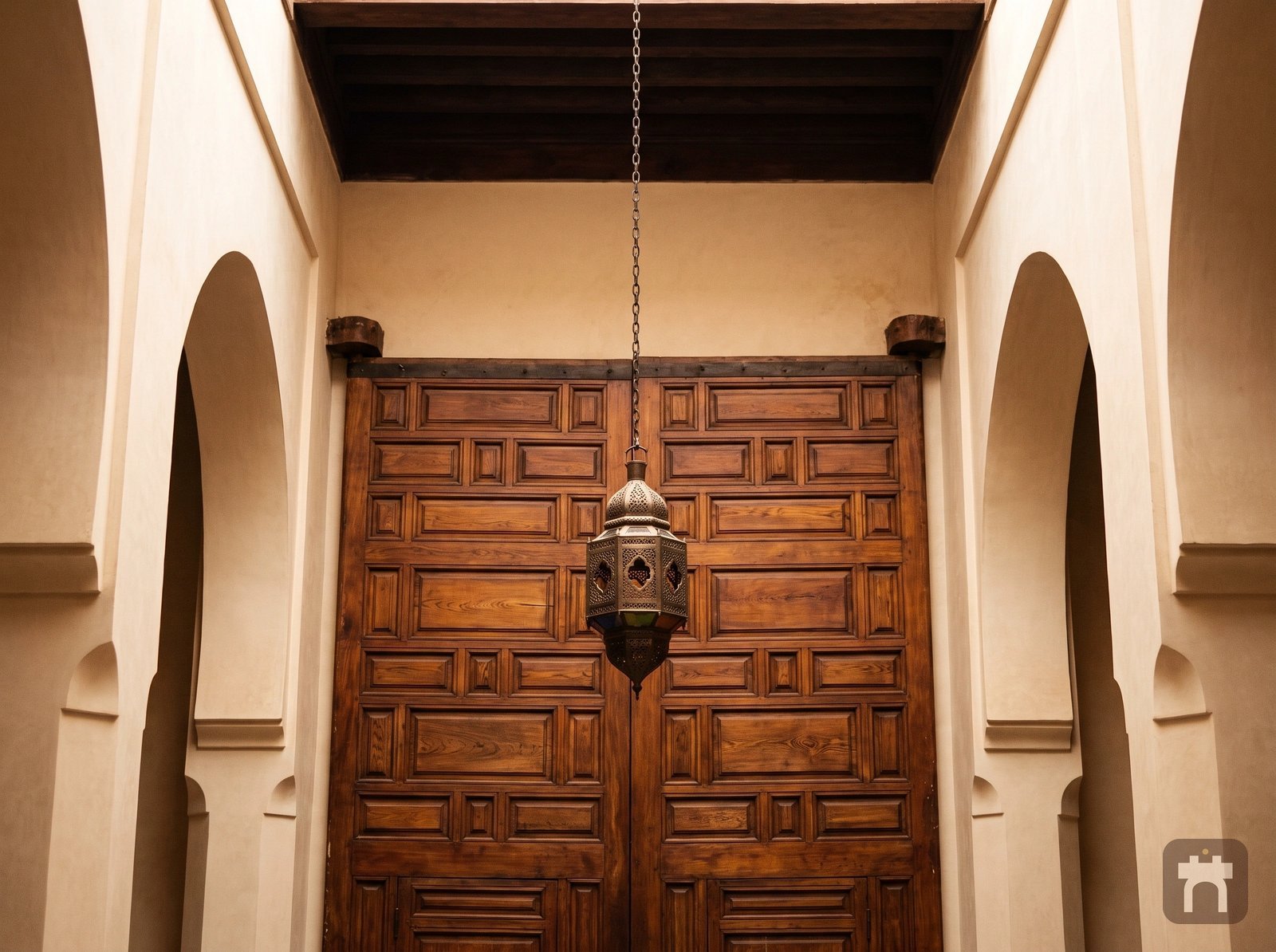
Before I went, I read a handful of reviews calling El Badi Palace “just walls and a pool,” which is technically accurate and also, I think, a little misleading about what actually makes the visit worthwhile. Here’s my honest take, having walked the whole site.
The Case Against
Let’s start with the fair criticism. Almost none of El Badi Palace’s original decoration survives — no painted cedar ceilings, no zellij-covered walls, none of the marble columns or gilded stucco that made it famous when it was built. Sultan Moulay Ismail had all of that stripped out in the late 17th century to build his new capital at Meknes, and what’s left is largely bare, weathered pisé (rammed earth). If you’re picturing something like the interiors at Bahia Palace — intact, colorful, furnished — El Badi will not deliver that, and I’d rather say so plainly than let you be disappointed on arrival.
The site is also almost entirely open-air, with minimal shade, which matters if you’re visiting in summer heat or simply don’t enjoy walking around exposed courtyards for an hour.
The Case For
That said, what El Badi does offer is genuinely hard to find elsewhere in Marrakech: raw scale. Standing in the main courtyard — roughly 135 by 110 metres, walled in by towering pisé ramparts on every side — gives a physical sense of Saadian ambition that no photograph quite captures. The reflecting pool, close to 90 metres long, mirrors those walls almost perfectly on a calm morning. White storks nest directly on the ramparts, which is a small but genuinely memorable detail most visitors don’t expect.
And despite the general emptiness, a few things did survive: the 12th-century Koutoubia minbar, displayed in its own pavilion, predates the palace itself by more than four centuries and is one of the most significant surviving objects of Islamic craftsmanship in Morocco. The excavated zellij courtyard shows patches of the original tilework at the palace’s true floor level. An underground gallery, now used for photography exhibitions, adds an unexpected detour most visitors miss entirely. And the rooftop terrace gives a panoramic view that makes the whole layout click into place in a way the ground-level courtyard doesn’t.
I cover all of these in more depth in our things to see inside El Badi Palace guide.
Who Should Visit, and Who Might Skip It
If you’re drawn to atmosphere, history, ruins, and photography — particularly golden-hour light on old walls — El Badi is likely to be one of the more memorable stops in Marrakech. If your priority is seeing intact Moroccan craftsmanship and decorative arts, Bahia Palace will satisfy that better, and if your schedule is genuinely tight, it’s a reasonable one to prioritize over El Badi. I compare the two side by side in El Badi vs Bahia Palace, including why most visitors with even half a day end up doing both.
My Honest Bottom Line
I went in slightly skeptical, expecting an empty courtyard and not much else, and left having spent closer to ninety minutes there than the sixty I’d planned. The emptiness itself is part of the story — this isn’t neglect, it’s the visible aftermath of a very deliberate historical decision — and once that clicks, walking around the ramparts feels less like looking at absence and more like reading a very physical piece of Moroccan history. For the entrance fee involved, I think it holds up.
Frequently Asked Questions
Is El Badi Palace worth the entrance fee? At 100 MAD for foreign visitors, most people find it worthwhile for the scale of the courtyard, the rooftop view, and the surviving Koutoubia minbar, even without intact interior decoration.
Is El Badi Palace overhyped? It’s marketed heavily as a Marrakech highlight, and while it doesn’t have the intact craftsmanship of Bahia Palace, its scale and atmosphere are genuinely distinctive rather than overhyped.
Who should skip El Badi Palace? Visitors mainly interested in intact painted ceilings, tilework, and furnished interiors will get more from Bahia Palace, and could reasonably skip El Badi if time is very limited. Check current El Badi Palace tickets and hours if you decide it’s worth the visit.